Ethical sourcing
Torahs must be written on the hide of a kosher animal, as must tefillin, mezuzot and scrolls of Esther. No other writing surface is acceptable from a perspective of halakha (Jewish law), and no other material can be used to make batim or retzuot for tefillin. Yet, there is a dissonance between the holiness of these objects and the parchment on which they are written. Most hides for scribing come from industrial agriculture, where animals live and die under deplorable conditions. At the Kedusha Project, we believe that there is no holiness in exploitation and that our tradition's most sacred ritual objects can help guide us towards a better path.
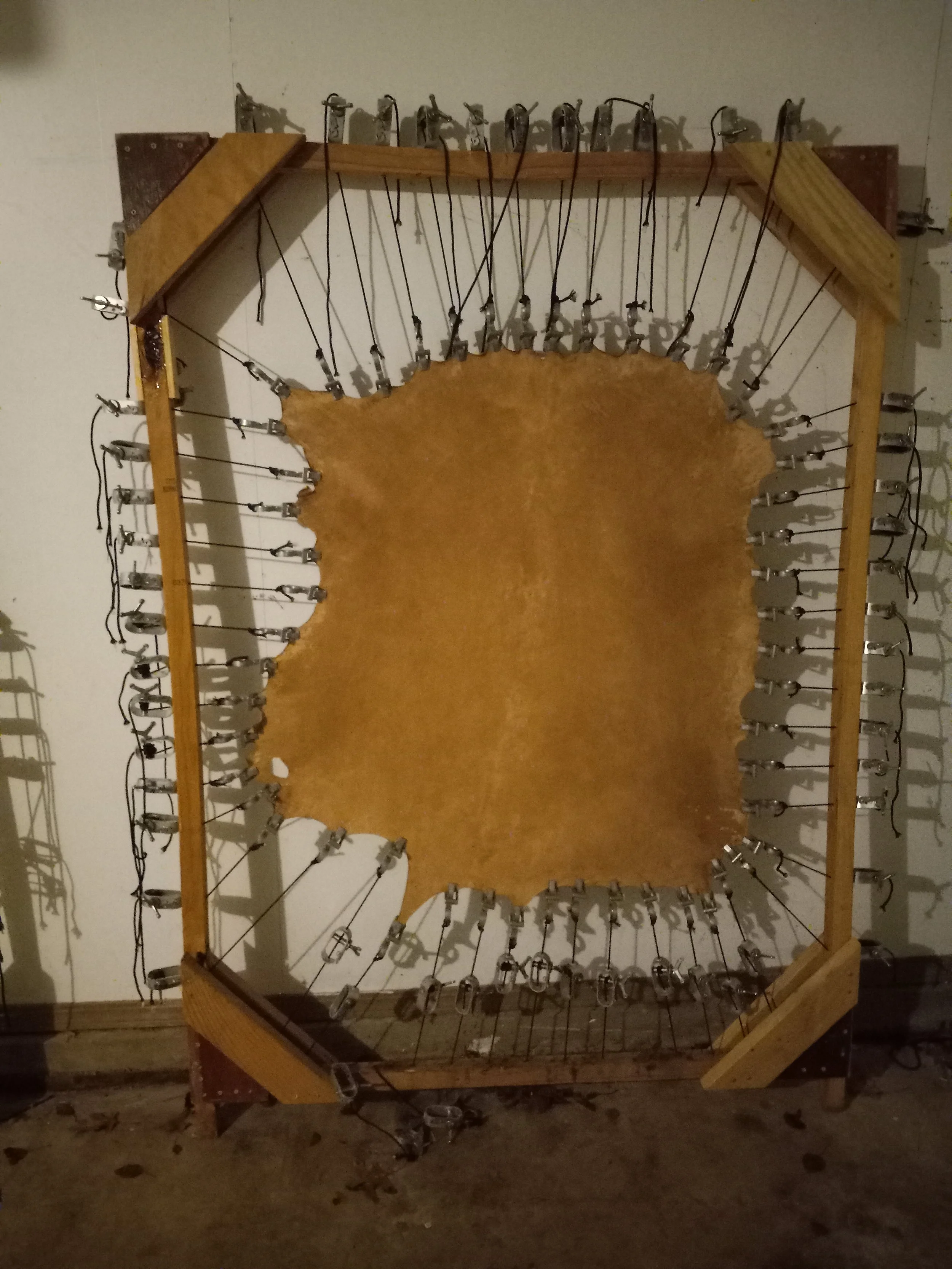
All of the hides used by the Kedusha Project are sourced ethically. We set out to work only with roadkill deer (which is perfectly kosher to use for parchment, though not to eat). As demand for our work has grown, we have come to also rely on hides from hunted deer and from farm animals that lived and died in humane conditions. Before processing the hide, we honor every animal in a ritual rooted in Jewish tradition, giving our gratitude to the life force which forms the foundation of the scribe's work. After we remove the hide (and sometimes the sinew for thread), we donate carcasses to wildlife rehabilitation centers, which feed the meat to recouperating predators preparing to return them to the wild. Thus, we make the best possible use of every part of the animal's body.
This work has challenged us to retrain our eyes to see the holiness in everything. With teamwork and discipline, we transform even a bloody deer carcasses strewn by the roadside into a worthy vessel for the words of the Living Gd. We often joke that we proudly write ugly mezuzot. In an industry that values smooth, white parchment, ours is often peppered with holes and blemishes. These defects don't affect the kashrut of the object (in fact, they used to be common, before the advent of modern supply chains made hides cheap and ubiquitous), but they also don't align with the sort of superficial beauty that people expect from these ritual objects.
We invite you to join us on this quest for holiness.