
Giraffe megillot
For centuries, Jews have dreamed of scribing sacred texts on the hides of giraffes—the world’s largest kosher animal. Through a combination of Mizrahi material traditions, modern technology, and meticulous hand processing, the Kedusha Project has made that long-imagined possibility a reality!
Our giraffe hide was ethically acquired, with care for both animals and the environment. Zemer the giraffe was the largest male in an overpopulated herd in Limpopo Province, South Africa. He was humanely culled by local wildlife authorities as part of population-health management, and proceeds from the sale of his hide supported local conservation efforts. Remarkably, Zemer’s hide has yielded enough parchment for approximately thirty megillot; by contrast, a single megillah typically requires hides from multiple fetal calves.
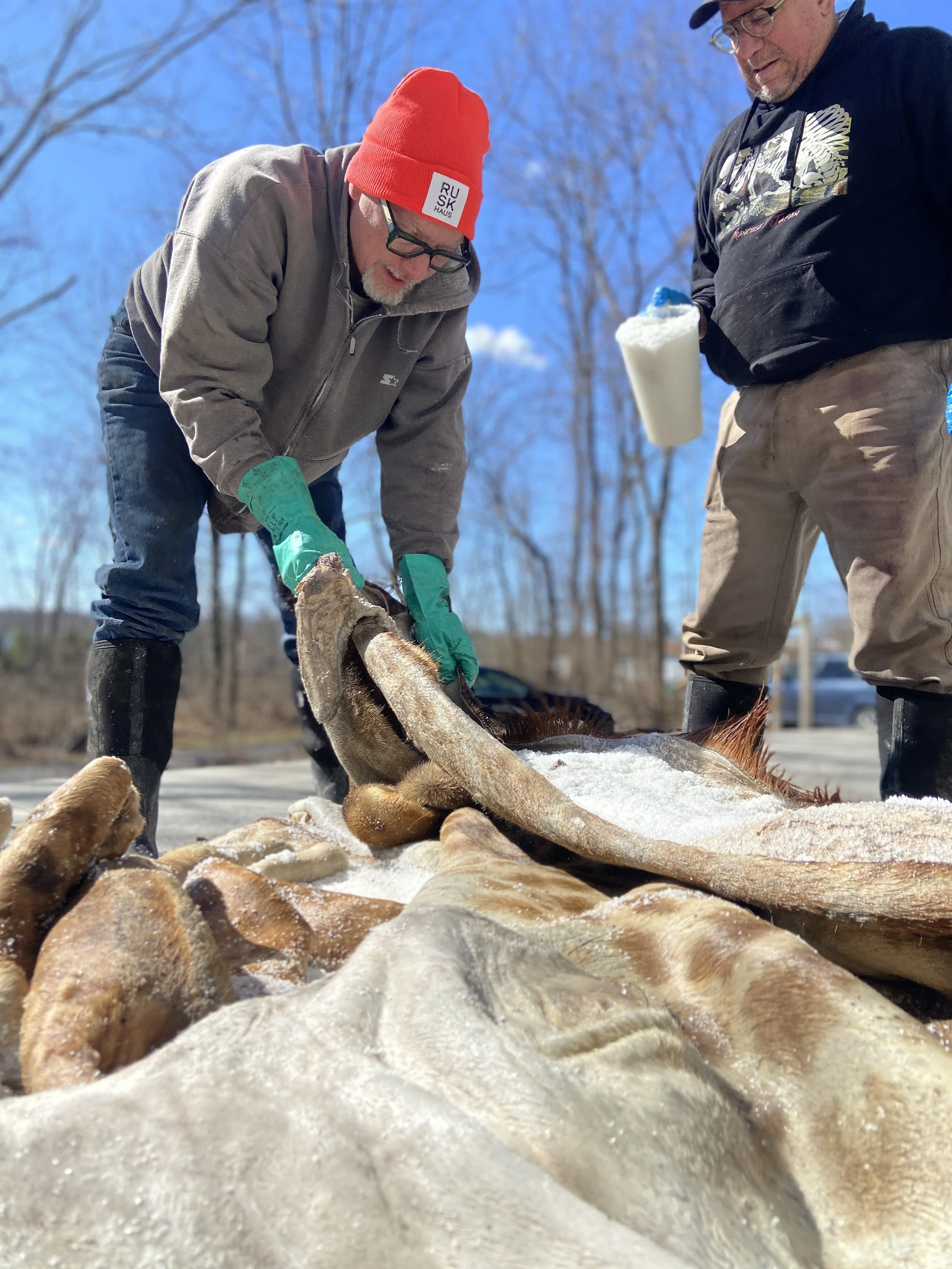
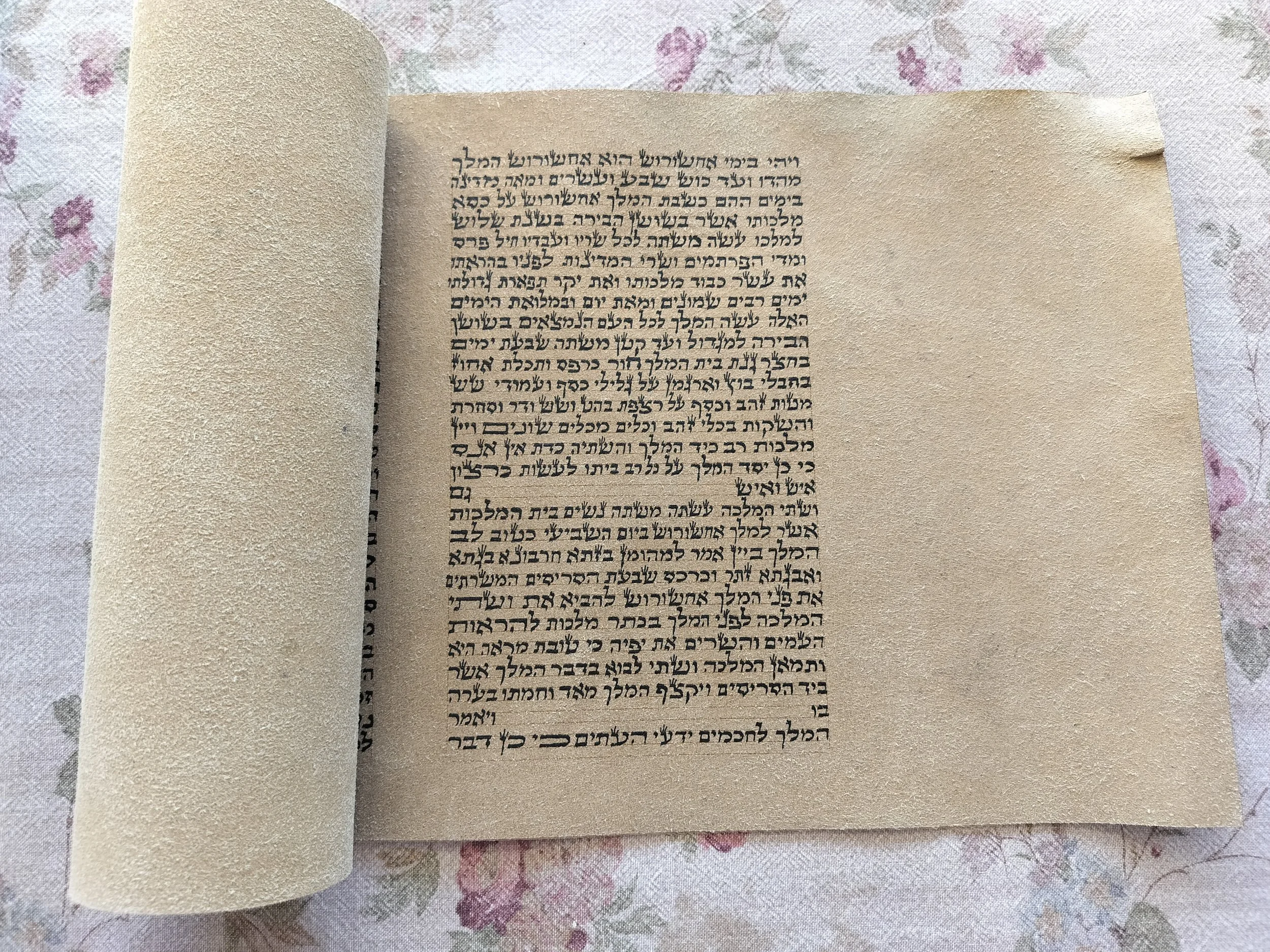
The hide was processed over the course of several months at Pergamena, the last remaining parchment factory in the United States. From raw hide to finished klaf, every stage required careful coordination between traditional craft knowledge and modern infrastructure.
The result is not only a set of megillot, but a reimagining of how sacred material culture can be sourced, processed, and brought into Jewish life.