
 Image 1 of 2
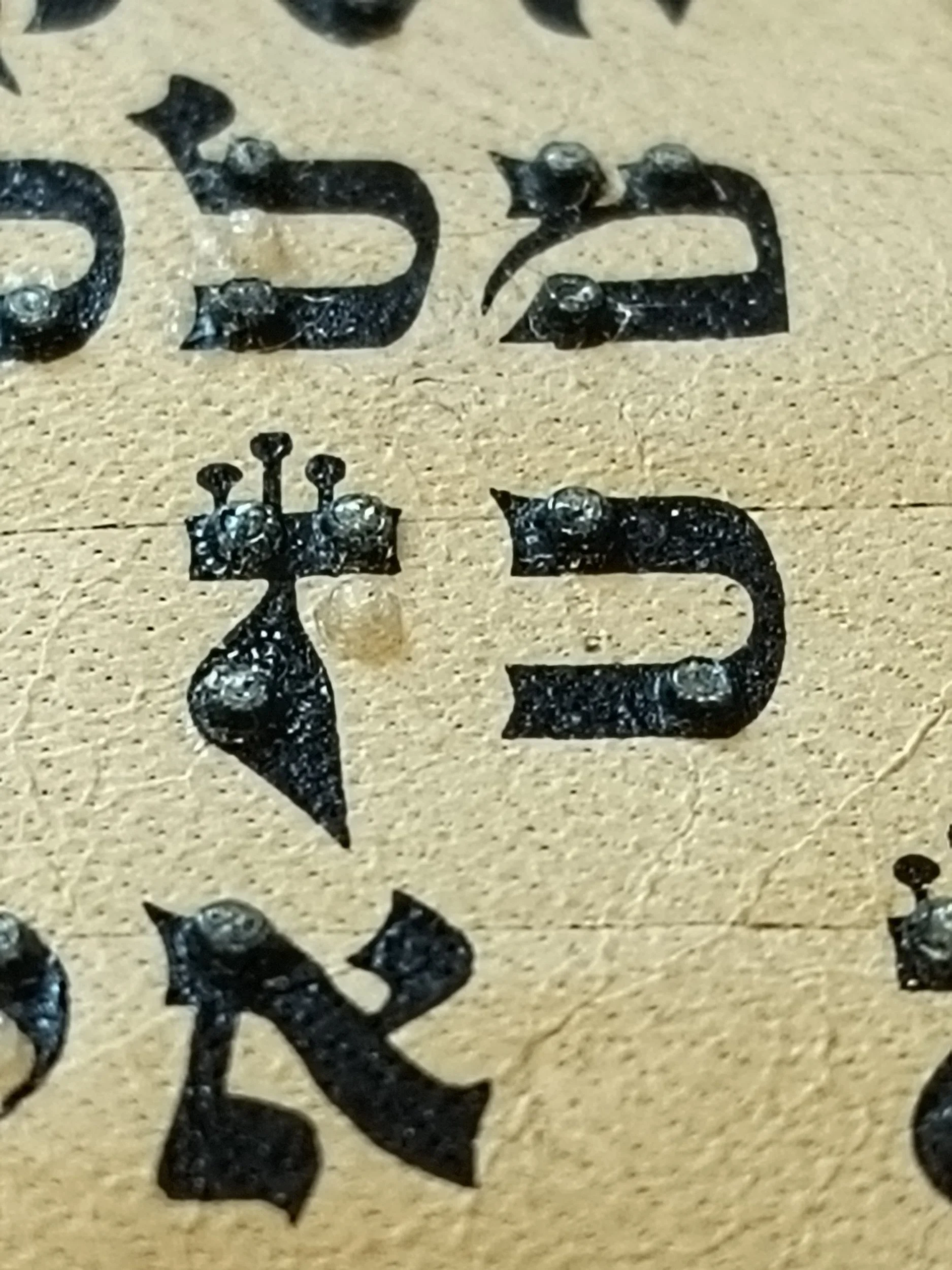 Image 2 of 2
For all of Jewish history, a blind or visually-impaired Jew could listen to the Megillah—but could not read the story of Esther aloud for the community on Purim. We have changed that!
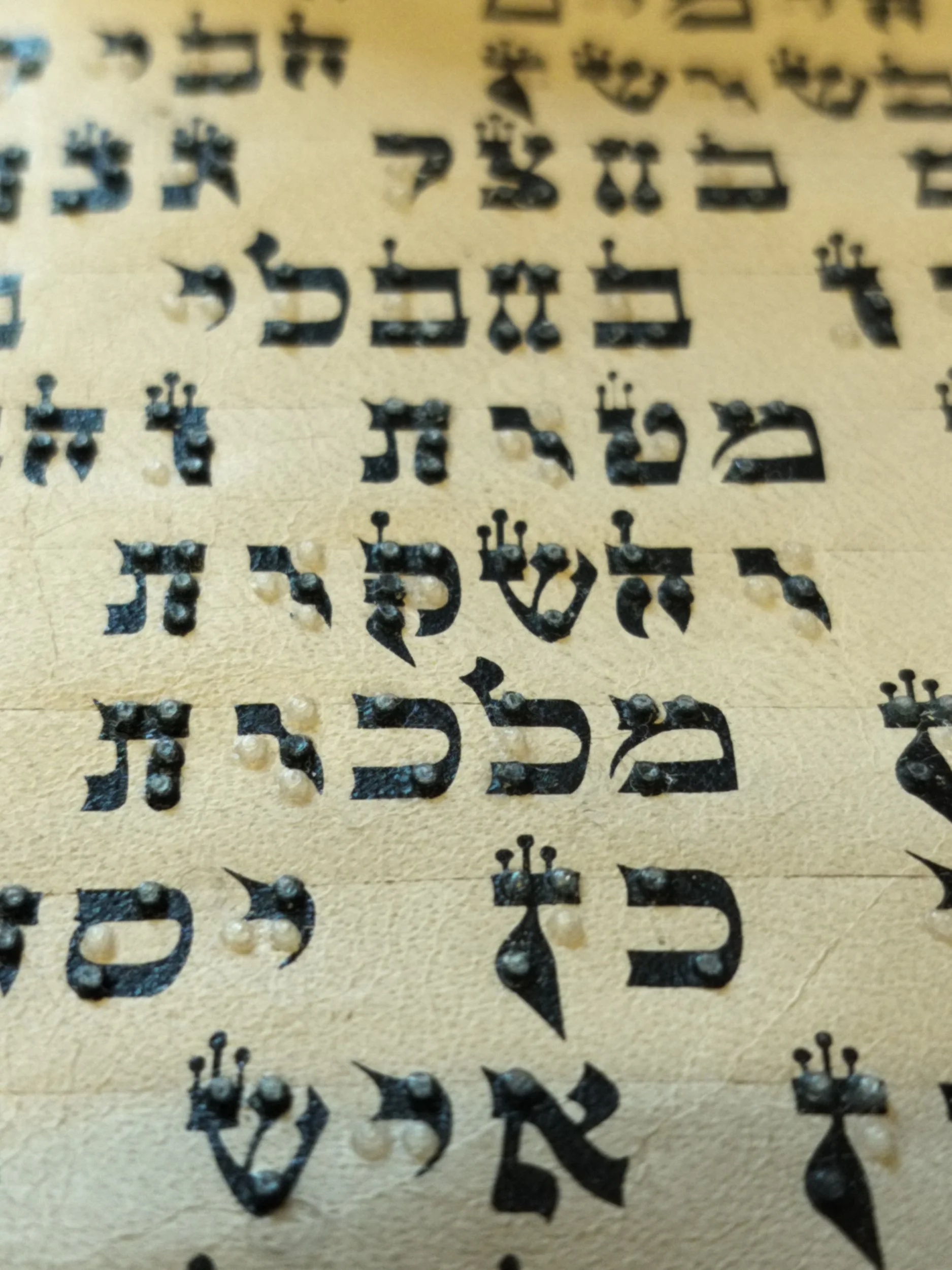
The Kedusha Project’s blind-accessible Megillah combines a kosher Megillat Esther—written in a modified, traditional Hebrew script—with raised Hebrew Braille, allowing a blind reader to navigate the text by touch while participating directly in the communal reading. The resulting scroll can be read by touch or by sight.
Developing this Megillah has required us to bring together scribal tradition, materials engineering, and accessibility design. The Hebrew text is written by screen printing on parchment, following the methods of Rabbi Itzchak Abadi. Tactile Braille is thereby incorporated into the scroll so that accessibility is part of the sacred object itself—not a separate book or electronic aid sitting alongside it.
As with all of our work, these megillot are made using ethically sourced parchment and with a commitment to halakhic care, transparency, and full participation in Jewish ritual life.
This is an evolving accessibility project. Different blind readers have different levels of Braille fluency, tactile sensitivity, and approaches to leining, and no single design will work equally well for everyone. We are continuing to learn from blind and low-vision Jews as we refine the format.
Our goal is not simply to make a Megillah that a blind person can access. It is to make a sacred object designed from the outset with blind Jews in mind—and to move toward a Jewish material culture in which accessibility is understood as part of kedusha itself.
Please note that, due to the requirements of scribal law, the Hebrew Braille is written from right to left.
Kosher under the supervision of Rabbi Juan Mejia.